SAMBA DE COURO EM TRANCOSO-BA E SUAS EPISTEMES CORPORIFICADAS
DOI:
https://doi.org/10.71199/3d499783Keywords:
Samba de Couro, popular demonstrations, body knowledgeAbstract
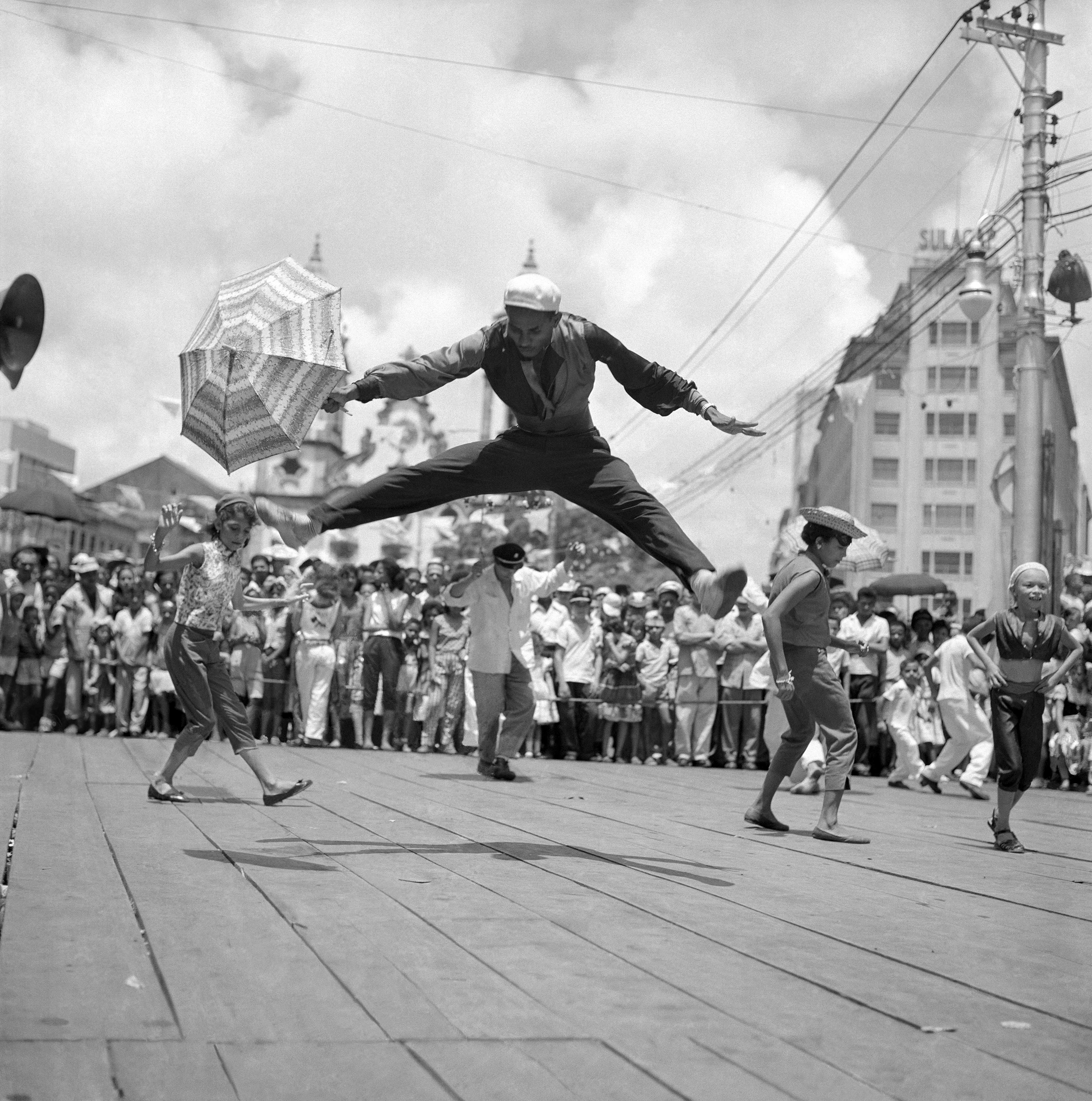
This paper seeks to understand the Samba de Couro (leather samba) that takes place in Trancoso, Bahia, as a movement of resistance, cultural memory, and knowledge production. We present the ancestral knowledge that emerges from this popular manifestation, knowledge of Afro-diasporic origins that originated in the bodies of enslaved Black Africans and is present in the rites that constitute the festivals in which samba is performed. In this article, I will focus on the celebration of Saint Sebastian. The times of this samba are described through the accounts of two native samba dancers who have experienced this popular manifestation since their childhood in the region. Fetching the pole from the forest, taking it to be prepared, and cutting flags, ribbons, and flowers for decorations are moments that precede the festival itself, which will be described and analyzed throughout this study. Samba de Couro is a scenic, poetic, and musical tradition that occurs at various celebrations throughout the country. To understand how Samba de Couro is configured as an episteme, I draw on the reflections of Simas and Rufino (2018), Souza and Barbosa (2012), Domenici (2009) and Kaphagawani and Malherbe (2019).
References
DOMENICI, Eloisa. A pesquisa das danças populares brasileiras: questões epistemológicas para as artes cênicas. Cadernos do GIPE-CIT: Grupo Interdisciplinar de Pesquisa e Extensão em Contemporaneidade, Imaginário e Teatralidade. Programa de Pós-Graduação em Artes Cênicas. Universidade Federal da Bahia. n. 23, p. 7-17 , 2009.
KAPHAGAWANI, Didier N; MALHERBE, Jeanette G. African epistemology. In: COETZEE, Peter H.; ROUX, Abraham P.J. (eds). The African Philosophy Reader. New York: Routledge, 2002, p. 219-229. Tradução para uso didático por Marcos Rodrigues.
MARTINS, Leda Maria. Performances do tempo espiralar: poéticas do corpo-tela. Rio de Janeiro: Cobogó, 2021. (Encruzilhada).
Ministério de Educação (MEC), Universidade Federal do Sul da Bahia (UFSB) Centro de Formação em Artes-CFA, Campus Sosígenes Costa (CSC) Projeto pedagógico do curso de especialização Dramaturgias Expandidas do Corpo e dos Saberes Populares, 2018.
SIMAS, Luiz Antônio; RUFINO, Luiz. Fogo no mato: a ciência encantada das macumbas. Rio de Janeiro: Mórula, 2018.
Downloads
Published
Issue
Section
License
Copyright (c) 2025 Revista Música e Cultura

This work is licensed under a Creative Commons Attribution 4.0 International License.